

Why do we speak too fast when nervous?
You stand up to present a quarterly update, pitch an idea to leadership, or answer a pivotal interview question. Within twenty seconds, you feel your heart pounding against your ribs. Your breathing turns shallow, your syllables bleed together, and before you know it, you are hurtling through slides at two hundred words per minute.
You finish in half the scheduled time, completely out of breath, only to be met with furrowed brows and the dreaded request: "Could you run through that one more time? You went a bit fast."
If you are searching for how to slow down when speaking, start by noticing the situation. Stress, shallow breathing, and trying to plan several ideas at once can all make speech accelerate. A persistent unusually rapid or irregular speaking pattern can also have other causes. If it regularly affects intelligibility or daily communication, consider speaking with a qualified speech-language pathologist; the American Speech-Language-Hearing Association describes rapid or irregular rate as one possible feature of cluttering.
A waveform is one way to visualize contrast between closely packed speech and a delivery with clearer spacing between ideas.
In everyday communication, three habits commonly make rushing feel worse:
- Fear of silence: Treating every brief pause as a problem to fill with rapid speech or filler words;
- Planning too far ahead: Thinking about the next several sentences while you are still delivering the first; and
- Worry about taking too much time: Hurrying because you expect the listener to interrupt or lose interest.
The good news? Pacing is not an immutable personality trait. It is a trainable physical and vocal motor habit.
Using WPM as a practical pacing benchmark
Before attempting to regulate your cadence, it helps to measure Words Per Minute (WPM). WPM is useful feedback, but there is no single ideal rate for every speaker, listener, language, or situation.
SpeechOptimizer uses 120 to 170 WPM as a broad practice range for short English workplace recordings. Treat it as a starting point rather than a clinical threshold: a clear 168 WPM explanation may work better than a hesitant 130 WPM answer with long, poorly placed pauses.
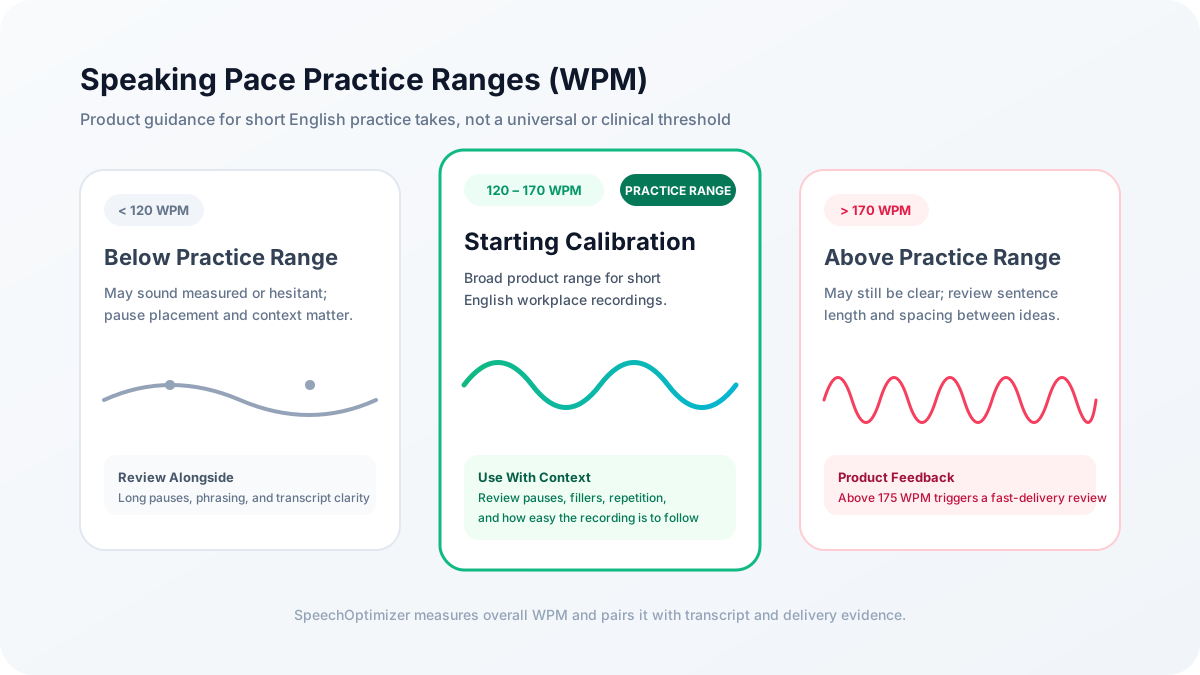
SpeechOptimizer uses 120 to 170 WPM as a broad practice range, then considers pauses, fillers, repetition, and transcript confidence alongside the overall pace.
Speech cadence benchmarking table
| Zone | WPM Range | Interpretation | Common Context |
|---|---|---|---|
| Below Practice Range | Under 120 WPM | May sound measured or hesitant depending on pause placement | Reflective answers, unfamiliar material, deliberate emphasis |
| SpeechOptimizer Practice RangePractice range | 120–170 WPM | Broad starting band; clarity still depends on context | Short workplace answers, presentations, and interviews |
| Fast Edge | 171–175 WPM | May remain clear, but sentence spacing deserves review | Energetic delivery and dense explanations |
| Fast-Delivery Flag | Over 175 WPM | App prompts a review for easier scanning and spacing | Rushed answers, long clauses, or limited pauses |
Use 120 to 170 WPM as an initial calibration range, then listen back. The real goal is not to hit a magic number; it is to leave enough space between ideas for the listener to follow them.
6 practical exercises on how to slow down when speaking
Telling yourself to "slow down" is often too vague to change a rushed delivery. Physical and structural cues give you something concrete to practice before pressure rises.

A steady breath before the first sentence creates a deliberate starting cue and gives you enough air to finish the opening thought.
1. Reset with a diaphragmatic breath before your opening syllable
The first sentence establishes the rhythm of the answer. If you begin with very little air left, you may compensate with short phrases or a hurried inhale.
How to practice:
- Before unmuting your microphone or stepping to the lectern, drop your shoulders.
- Inhale through your nose into your belly for two counts.
- Allow your ribs to expand rather than your upper chest.
- Speak your opening sentence on a full, steady column of air.
Treat this as a pacing cue, not a medical intervention or a guarantee of an immediate hormonal change. Research on repeated diaphragmatic breathing practice suggests potential stress benefits over time, while this exercise has the narrower purpose of helping you begin with a steady breath.
2. Punctuate thoughts with deliberate boundary pauses
Fast speakers often treat a period like a hurdle to jump over rather than a stop sign. A brief boundary pause gives the listener time to register the completed idea and usually feels shorter to the speaker than expected.
Instead of trying to speak every individual word slowly—which sounds unnatural—speak your phrase normally, but insert deliberate, full-stop pauses at the end of each complete idea.
If you struggle with the silence, learn to replace vocalized fillers with quiet pauses. You can read our detailed breakdown on how to stop saying um to master the exact transition pause mechanics.
3. Elongate vowels on stressed syllables
Fast speakers tend to clip their vowels, rushing from consonant to consonant: "Weneedtoevaluatetheresults."
One way to regulate tempo without dragging every word is to give stressed syllables slightly more space.
The technique:
- Identify the most important word in your sentence.
- Spend an extra fraction of a second on the core vowel sound of that word.
- For example: "We need to really foc-u-s on customer ret-e-n-tion this quarter."
Lengthening selected stressed vowels can anchor your tempo and add vocal variety without making the whole sentence sound slow.
4. Chunk complex arguments into short idea groups
When you see an entire paragraph as one continuous thought, you may sprint to the finish line. Instead, divide the message wherever one idea, clause, or breath group naturally ends. The right length depends on the sentence; it is not a fixed five-to-seven-word memory rule.
Divide your message into distinct informational packets:
- Chunk 1: "Over the past three months..." (1-second pause)
- Chunk 2: "Our team tested four conversion variations..." (1-second pause)
- Chunk 3: "And variation B increased signups by twenty-two percent." (Full stop)
Pacing your delivery in short idea groups makes it easier to breathe and gives the listener clear boundaries between points.
5. Anchor your physical gestures to your cadence
Rapid movement can reinforce the feeling of a rushed delivery. Some speakers notice that their hands, fingers, or gaze speed up along with their voice.
To slow down your voice, slow down your body:
- Place both feet flat on the floor to provide a physical anchor.
- Open your palms on key words and hold the gesture until the thought is complete.
- When you pause your speech, pause your hand movements.
Coordinating stillness with verbal pauses gives you another visible cue to finish one thought before beginning the next. For a comprehensive look at physical presence, explore our guide on how to speak confidently.
6. Run a two-take practice loop with WPM measurement
Subjective impressions are notoriously inaccurate. After speaking, you might feel like you dragged on endlessly, yet your recording reveals a frantic 185 WPM.
A practical way to calibrate your internal sense of speed is through an objective feedback loop:
- Take 1 (Baseline): Record a 60-second answer to a real question without self-editing.
- Review: Inspect your overall Words Per Minute plus timestamped filler-word and long-pause evidence.
- One Target: Choose one specific adjustment (e.g., "Insert a 1-second pause after every metric").
- Take 2 (Calibration): Re-record the exact same answer immediately.
Comparing Take 1 and Take 2 connects the measured pace with how the revised delivery felt while you were speaking.
Illustrative example: comparing Take 1 vs Take 2
The following fictional product-manager example demonstrates the two-take workflow. The wording and metrics are illustrative, not a customer testimonial or a claimed outcome.
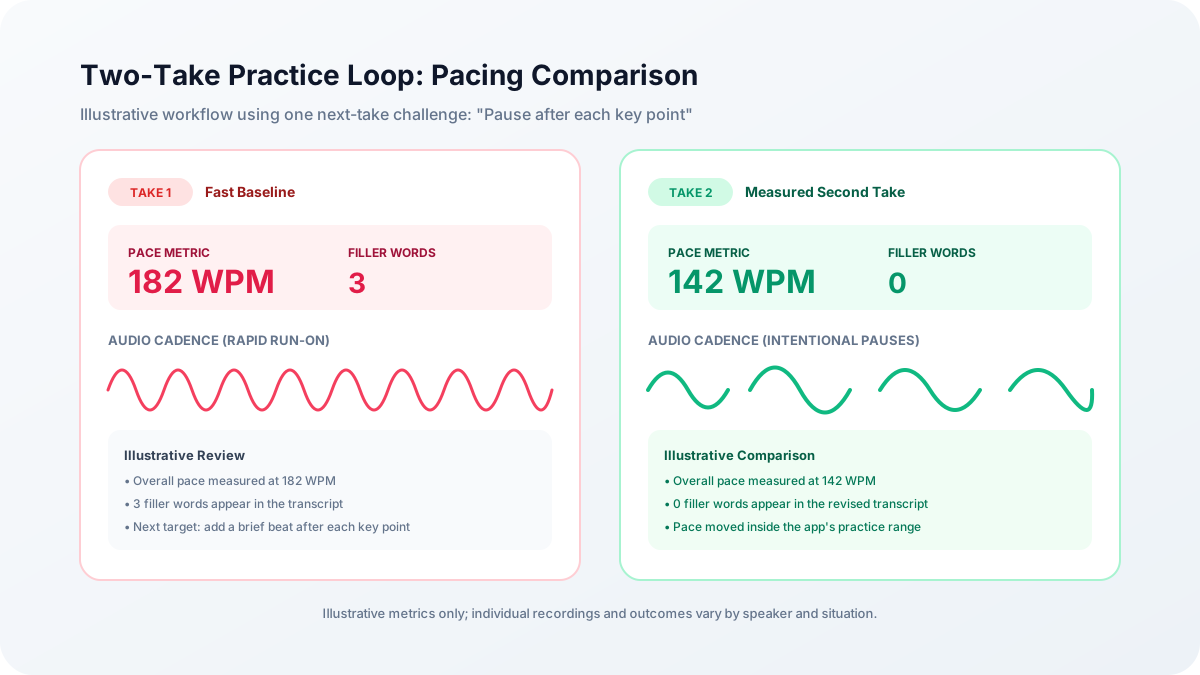
An illustrative two-take comparison showing how one focused pacing target can change overall WPM and filler-word use.
Take 1: Fast Baseline (182 WPM)
"So basically what we saw last quarter was our onboarding conversion fell to 14% which is obviously concerning so we rushed to deploy a hotfix but that created two new technical debt issues that our engineering team had to scramble to patch."
- Pace: 182 WPM
- Fillers: 3 ("basically", "obviously", "so")
- Next-take target: Add a brief beat after each key point.
Take 2: Measured Second Take (142 WPM)
"Last quarter, onboarding conversion dipped to 14%. [1-second pause] We deployed an immediate patch. [1-second pause] That solved the drop, but highlighted two architectural risks our engineering team is addressing this month."
- Pace: 142 WPM
- Fillers: 0
- Result: Pace moved inside the app's practice range while preserving the key information.
The main information remains similar, but the revised structure gives each point more space to land. This is the kind of change a two-take comparison can make visible without promising that every speaker will get the same result.
Common pacing mistakes that make rushing worse
When people attempt to fix rapid speech, they often fall into traps that harm their communication even further:
Trying to speak every word in slow motion
Dragging out every single word makes you sound patronizing or disengaged. Great public speaking utilizes cadence contrast: speak natural phrases at a normal speed, but give full weight and silence to the spaces between ideas.
Relying on an uninterrupted internal script
Trying to recite a memorized speech word-for-word triggers anxiety because any hesitation feels like failure. Practice answering in structured outlines rather than rigid scripts so you are never racing to retrieve a forgotten word.
Ignoring the acoustic feedback of the room
In large rooms or virtual Zoom calls with audio lag, speaking too fast causes reverberation and echoes that garble consonants. Always allow an extra half-second for digital compression and room acoustics to clear.
How an AI speech coach locks in lasting pacing habits
It is difficult to estimate your own WPM accurately while you are concentrating on the content of an answer. A recording gives you something concrete to review after the take.
This is where an automated speech workbench provides the missing link:
- Exact WPM tracking: See whether your speech cadence is sitting at 140 WPM or climbing past 180 WPM during tough explanations;
- Timestamped delivery evidence: Review detected filler words and long pauses alongside the transcript;
- Actionable Take 2 recommendations: Receive a concrete adjustment to apply on your next take.
With SpeechOptimizer, you can test a 30 to 120-second practice take in your browser without creating an account. Record a trial answer, review the delivery metrics and evidence, then compare a focused second take.
FAQ: how to slow down when speaking
Why do I speak so fast when I get nervous?
Stress can contribute to shallow breathing, reduced pause time, and an urge to finish quickly, but it does not affect every speaker in the same way. Practice a steady opening breath and clear boundary pauses, then use a recording to see which pattern actually changes your pace.
What is the ideal speaking rate in words per minute (WPM)?
There is no universal ideal rate. SpeechOptimizer uses 120 to 170 words per minute as a broad practice range for short English workplace recordings. Use the number together with pause placement, sentence length, and how easy the recording is to follow.
Won't slowing down make me sound robotic or boring?
No. Slowing down does not mean droning in monotone. Dynamic speakers use rhythmic contrast: they speak conversational phrases naturally, but insert clear, deliberate pauses after key takeaways. This contrast sounds thoughtful, authoritative, and engaging.
How do I remember to slow down during a live presentation?
Write physical pause cues directly into your notes or slide headers. Use a bright slash mark // or the word [PAUSE] at transition points. When you see the cue, pause, take a sip of water, or count one breath before proceeding.
Can an AI speech coach help me calibrate my speaking pace?
Yes. An AI speech coach can measure overall WPM, show timestamped filler-word and long-pause evidence, and compare delivery metrics across practice takes. These measurements make the review more concrete, but you still decide whether the result sounds clear and natural for the situation.
Conclusion: master the rhythm of intentional speaking
Learning how to slow down when speaking is not about artificially dragging your words. It is about claiming your rightful space in the conversation. When you pause and control your tempo, you signal to your audience that your ideas are worth listening to.
Start small today: pick one meeting update or interview response, record a 60-second baseline take, and observe where your tempo accelerates. Then retry with one goal: let the periods breathe.
Ready to hear your exact speaking pace?
Record a free 60-second practice take, view your words-per-minute breakdown, and see the difference on Take 2.
Ready to take control of your delivery? Try our free AI speech coach directly on our homepage, check out our pricing and plans for ongoing practice, or explore our speech practice FAQ for more communication techniques.