Speaking confidently is rarely about sounding fearless. The real problem is usually more practical: you know what you want to say, but your pace speeds up, pauses disappear, filler words creep in, or one phrase gets repeated until the message feels less polished. That gap between “I know this” and “I sound confident saying this” is frustrating because reading another list of public-speaking tips does not automatically change what happens in your next take.
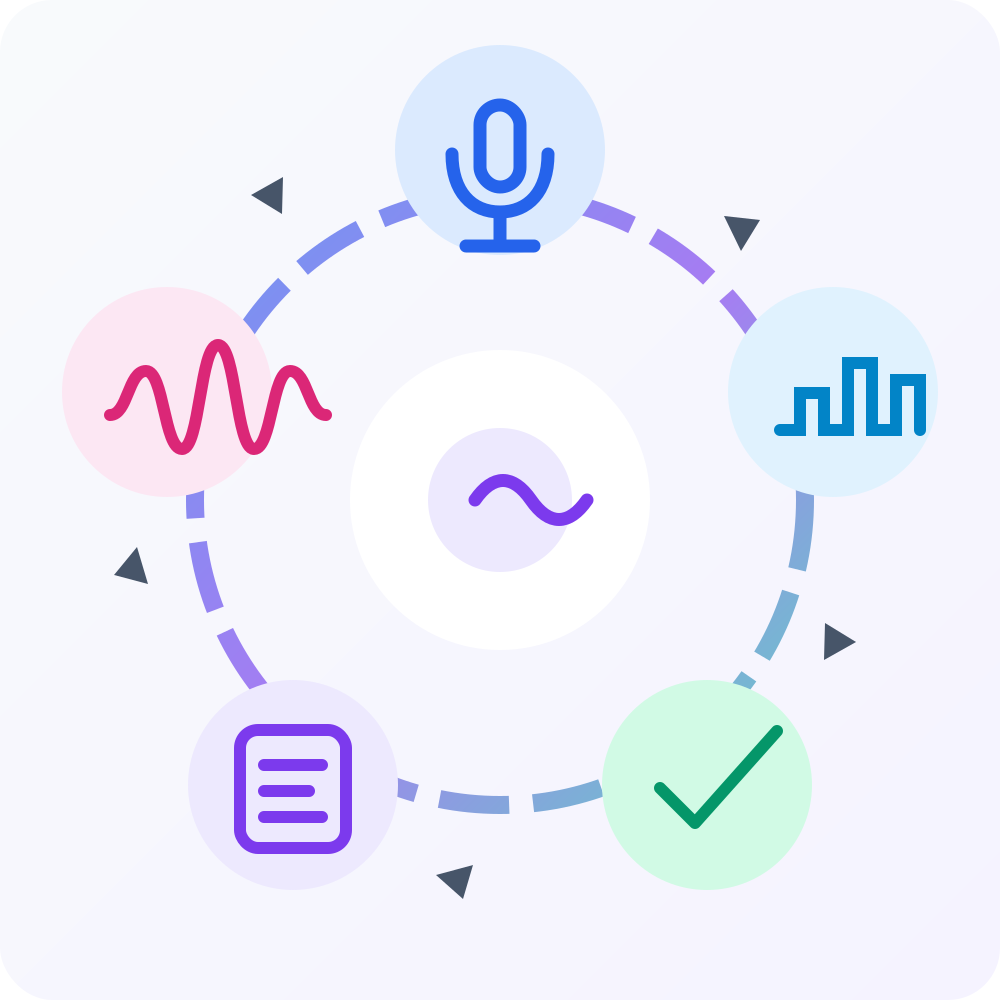
A better approach is to practice one short speech, measure what actually happened, choose one improvement target, and record it again. This guide explains how to speak confidently using a repeatable loop built around pace, pauses, fillers, repeated phrases, evidence, and focused re-recording.
Table of contents
- What confident speech actually sounds like
- Step 1: start with one clear speaking goal
- Step 2: control pace before chasing perfection
- Step 3: replace fillers with useful pauses
- Step 4: remove repeated phrases
- Step 5: use evidence instead of vague self-judgment
- Step 6: re-record immediately
- A real two-take example
- Common mistakes to avoid
- FAQ

What confident speech actually sounds like
Confidence is not the same as speaking loudly, speaking fast, or eliminating every hesitation. A confident delivery usually feels easier to follow because the listener has enough time to process the message.
In practice, that often means:
- a pace that matches the complexity of the idea;
- pauses at meaningful boundaries instead of panic-filled silence;
- fewer filler words such as “um,” “uh,” “like,” or “you know”;
- fewer repeated phrases that restart the same point;
- a clear sentence ending before the next idea begins; and
- enough variation in emphasis that important words stand out.
The goal is not to sound artificially perfect. The goal is to reduce the delivery habits that make your message harder to understand.
Step 1: start with one clear speaking goal
Trying to fix five delivery problems in one recording usually creates more tension. Pick one scenario and one improvement goal instead.
For example:
- Presentation: slow down during technical explanations.
- Interview answer: stop restarting the opening sentence.
- Sales pitch: use fewer filler words before the call to action.
- Meeting update: pause between status, risk, and next step.
- Storytelling: make the key moment more concise.
A narrow goal gives you something observable. “Be more confident” is difficult to measure. “Pause once after the main result before explaining the details” is specific enough to practice.
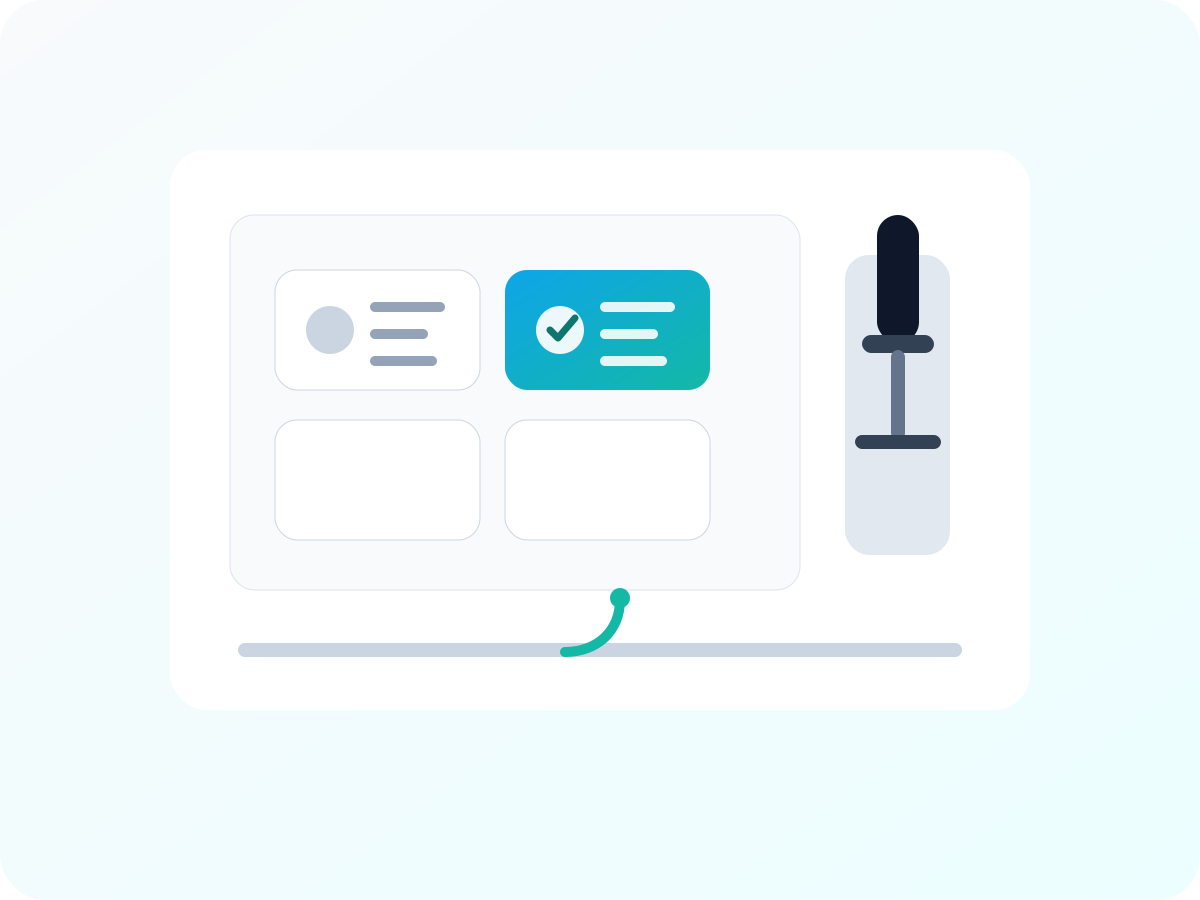
If you want a structured starting point, you can practice a short take with SpeechOptimizer and choose the scenario and improvement target before recording.
Step 2: control pace before chasing perfection
Fast speech often feels efficient to the speaker and rushed to the listener. The useful question is not “Am I above or below an ideal words-per-minute number?” It is “Does my pace give the listener enough time to understand each idea?”
Start with a 30–120 second practice answer. Then look for the sections where your delivery becomes noticeably faster. These speed changes are often more useful than one average number.
A simple pace drill
- Record one natural take without trying to sound polished.
- Identify the sentence where you begin to rush.
- Put a deliberate pause immediately before that sentence.
- Record the same answer again.
- Compare whether the important sentence sounds easier to follow.
Do not force every sentence to the same speed. Confident speakers can accelerate through familiar setup and slow down for a key claim, number, contrast, or decision.
Step 3: replace fillers with useful pauses
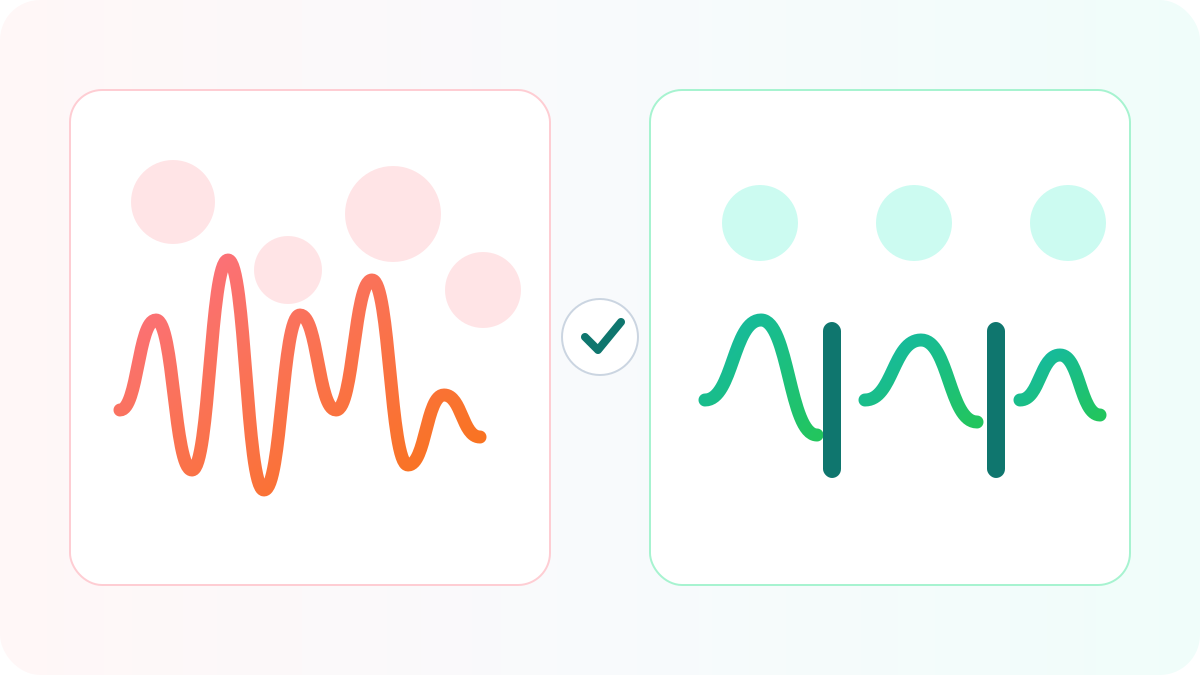
One of the fastest ways to sound more composed is to stop treating every silence as a mistake. A short pause is often clearer than a filler word.
Fillers usually appear when your mouth keeps moving while your brain decides what comes next. The fix is not to “never say um again.” The fix is to build a different default response to that planning moment.
Try the pause substitution drill
When you notice yourself about to say “um,” “uh,” “like,” or another habitual filler:
- close the previous sentence;
- inhale normally;
- pause for a beat;
- start the next sentence with the actual point.
This works best when you practice it on a real answer rather than reading a script. The goal is to create a reusable speaking habit under mild pressure.
Step 4: remove repeated phrases that weaken the message
Repeated phrases are different from ordinary fillers. A speaker may say “the main thing is” three times, restart a clause, or repeat the same transition because it feels safe while thinking.
The listener hears extra words without getting extra meaning.
To reduce repeated phrases, review the transcript after a practice take and mark phrases that appear more than once without a clear rhetorical reason. Then choose one replacement strategy:
- delete the second occurrence;
- replace it with a more specific transition;
- combine two similar sentences; or
- pause instead of restarting the phrase.
This is one reason a transcript can be more useful than memory. You may not notice a repeated phrase while speaking, but it becomes obvious when the same wording appears several times on the page.
Step 5: use evidence instead of vague self-judgment
Many people finish a recording and immediately decide, “That sounded bad.” That judgment is emotionally strong but operationally weak. It does not tell you what to change.
A better review separates evidence from interpretation.
Evidence
- a repeated phrase appeared twice;
- the final third of the answer was faster than the opening;
- several fillers appeared before transitions;
- a long sentence had no pause before the key point.
Action
- replace the repeated phrase with one direct transition;
- pause before the final section;
- end the sentence before deciding what comes next;
- split one long sentence into two.
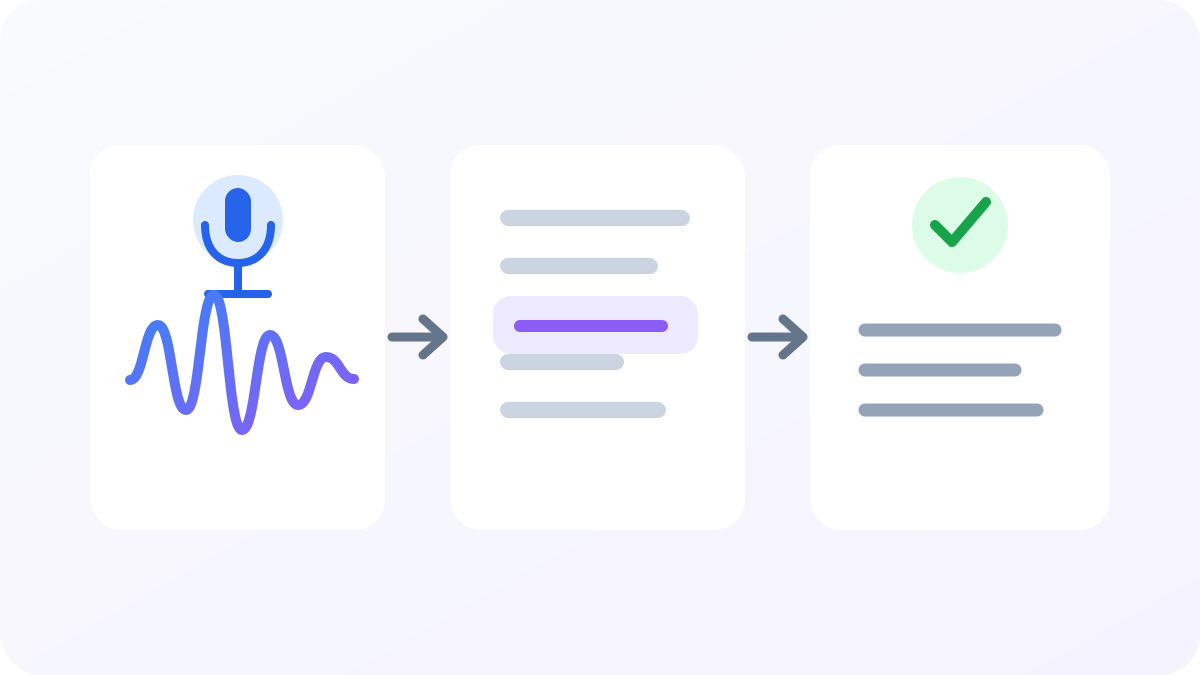
That evidence → action connection is the core of deliberate speech practice. A useful AI speech coach should show why a recommendation exists instead of giving only a generic confidence score.
Step 6: re-record immediately
The second take is where advice becomes skill.
After reviewing the first recording, do not spend twenty minutes rewriting everything. Keep the same scenario, choose one or two concrete targets, and record again while the first take is still fresh in your mind.
A useful second-take challenge might be:
- pause before the main recommendation;
- remove one repeated transition;
- finish each sentence before starting the next idea.
Then compare the recordings. Did the targeted behavior improve? Did a new problem appear? Is the message clearer even if it is not perfect?
That loop — take → evidence → action → next take → compare — is more useful than collecting tips without testing them.
A real two-take example from SpeechOptimizer testing
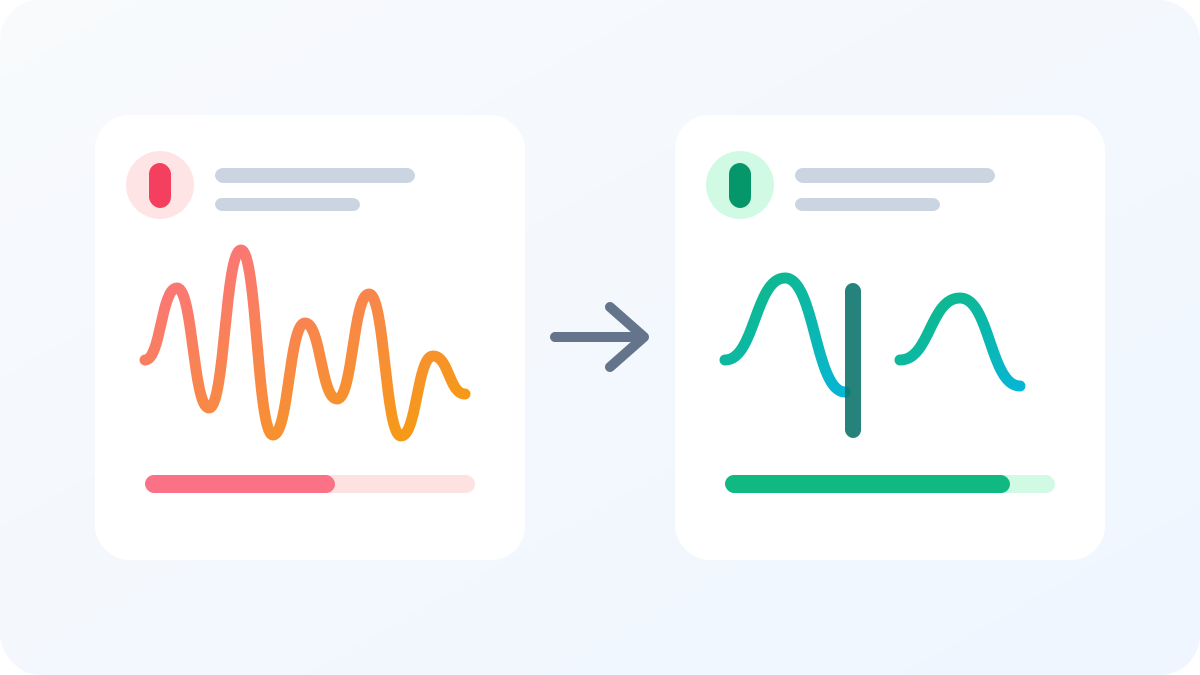
During SpeechOptimizer’s production acceptance testing, we used two linked English practice recordings rather than a scripted demo.
The first take was 53.6 seconds and produced a 111-word transcript. The second take was 47.7 seconds and produced 93 words. The comparison showed the tracked repeated-phrase rate moving from approximately 1.12% to 0%, while the second-take report marked 2 of 3 practice goals completed.
This is an internal product test, not an independent scientific study, so it should not be read as a guaranteed outcome. Its value is simpler: a measurable delivery habit identified in one take could be targeted and checked in the next take.
Common mistakes that make speaking practice less effective
Memorizing every word
A fully memorized script can improve one performance while doing less for spontaneous speaking. Practice the structure and key phrases, but leave enough flexibility to speak naturally.
Fixing everything at once
If you focus simultaneously on speed, pitch, fillers, eye contact, vocabulary, posture, gestures, breathing, and timing, your working memory becomes the bottleneck. Pick the change most likely to improve clarity first.
Using only an overall score
A score can summarize performance, but it does not automatically tell you what happened. Prefer specific evidence such as transcript excerpts, pause timing, filler locations, repeated phrases, and before/after changes.
Waiting too long to try again
The longer the delay between feedback and the next take, the harder it is to connect the adjustment to the original behavior. Re-record while the target is still easy to remember.
Keeping recordings you do not need
Speech recordings can be sensitive. Use tools that make retention choices clear. SpeechOptimizer deletes source audio after analysis by default unless a signed-in user explicitly chooses to retain it; guest source audio is configured for deletion after analysis. You can read the current details in the Privacy Policy.
FAQ: how to speak confidently
How can I speak more confidently without memorizing a script?
Use a simple structure instead of exact wording: opening point, two or three supporting ideas, and a clear ending. Record a short answer, review one measurable delivery habit, and repeat the same answer with that single change.
How do I stop saying “um” and “uh”?
Do not try to eliminate every filler by force. Practice replacing the planning moment with a short pause. Finish the sentence, pause, then begin the next idea when you know what you want to say.
What speaking pace sounds confident?
There is no single ideal pace for every speaker or topic. Aim for a pace that gives listeners enough time to understand the message. Slow down around important claims, numbers, contrasts, and decisions, and use pauses to separate ideas.
Can an AI speech coach improve public speaking confidence?
An AI speech coach can make practice more concrete by surfacing transcript evidence, delivery metrics, repeated phrases and focused next-step suggestions. It cannot guarantee confidence or replace human judgment, but it can make the feedback-and-re-record loop faster and easier to repeat.
How often should I practice?
Short, focused practice is often easier to repeat than occasional long sessions. A practical routine is one or two 30–120 second takes around a real scenario, with one measurable target per session.
Conclusion: confidence grows from a repeatable feedback loop
If you want to learn how to speak confidently, focus less on performing confidence and more on making your delivery easier to understand. Choose one real scenario, record a short take, identify one evidence-backed change, and re-record it immediately.
Start with pace, pauses, fillers, and repeated phrases because they are concrete enough to observe. Then use the comparison between takes to decide what to practice next.
You can try the speech practice workflow, review pricing and usage options, or read more speech practice articles. If you are evaluating any speech-analysis tool, also review how it handles recordings and transcripts before uploading sensitive content.