
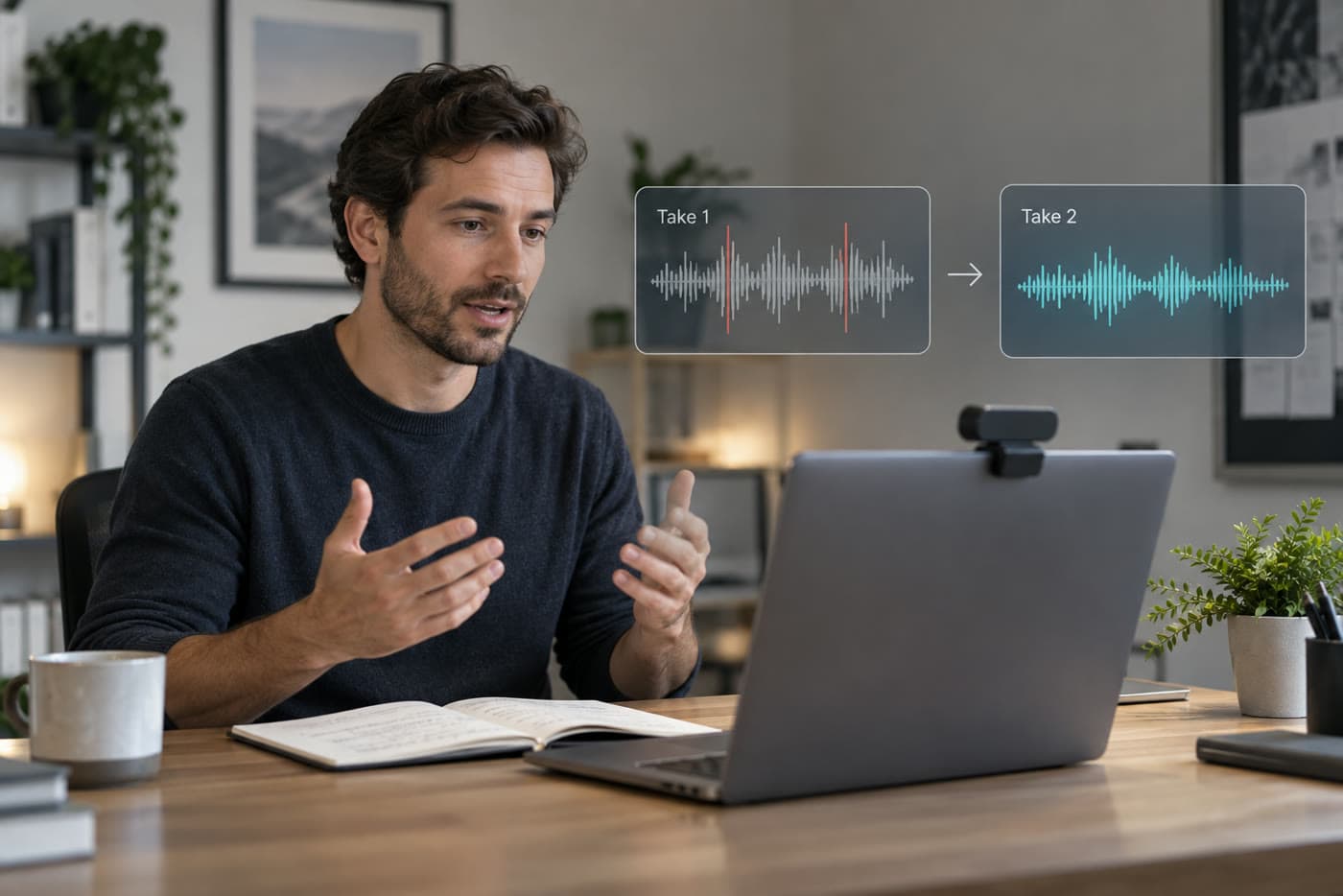
Good speech pacing exercises give you one behavior you can hear and repeat. “Talk slower” is too vague to practice under pressure. A cue such as “pause after the main point,” “finish the opening sentence before planning the next one,” or “separate three ideas with full stops” is easier to remember and compare on a second take.
Use the drills below with a real interview answer, meeting update, presentation section, classroom explanation, or sales response. Keep the topic and key points stable while you change one pacing habit at a time. That makes it easier to tell whether the exercise improved clarity or simply made the recording longer.
In this guide
- eight practical pacing drills for pauses, breath, emphasis, and structure;
- a two-take method for comparing one controlled change;
- a 10-minute routine you can reuse before a presentation or interview;
- common mistakes that make pacing practice less useful; and
- answers to common questions about speech pacing practice.
1. The two-boundary pause drill
Choose a 45–60 second answer. Mark two places where one idea ends and another begins. Pause briefly at both boundaries, then re-record without changing the wording.
This drill works because it gives silence a job. Instead of trying to slow every word, you create two clear places where the listener can process what you just said.
2. The slash-mark script
Take a short script and add / for a small pause and // for a full idea boundary. Read it once, then put the script away and repeat the same rhythm naturally.
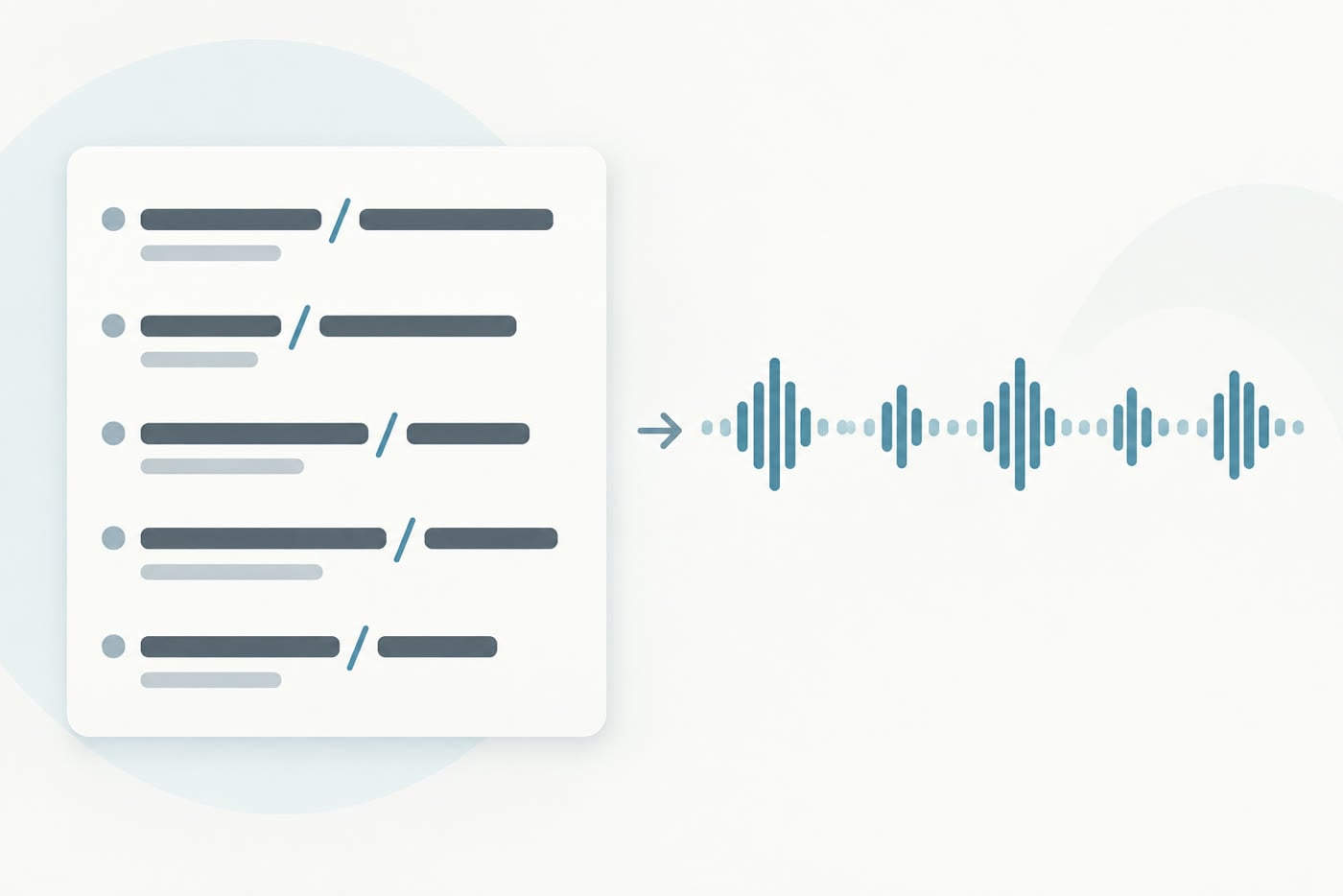
Pause marks turn an abstract instruction into visible places where one thought ends and the next begins.
Do not keep reading from the marked script forever. The goal is to learn the rhythm, then deliver the same structure without sounding read aloud.
3. The one-breath opening
Before the first word, take one comfortable breath and let the opening sentence finish before you plan the next one. This is especially useful if you rush the first ten seconds of an answer.

A comfortable breath before the first sentence gives you a physical cue to begin at a deliberate pace.
Avoid turning this into a dramatic breathing routine. One calm breath is enough. The useful behavior is the deliberate start, not the size of the inhale.
4. The three-chunk answer
Limit your response to three chunks:
- main point;
- supporting reason or example;
- next step or conclusion.
Pause between chunks. Structure reduces the urge to sprint through a long, unbroken answer because you know where each section ends.

Three clear chunks make it easier to pace an answer without memorizing every sentence.
5. The emphasis anchor
Pick one important word or short phrase per sentence. Give it slightly more vocal weight, then allow a beat before the next idea. Emphasis can regulate pace without making every word slow.

Emphasis creates contrast, which can make a fast speaker easier to follow without flattening the whole delivery.
6. The filler-to-pause substitution
Record one minute and count obvious fillers such as “um,” “uh,” or repeated “like.” On Take 2, do not try to eliminate every filler. Replace only the first three with silence.
If fillers are the main issue, use the detailed guide on how to stop saying um. Replacing a few predictable fillers is a smaller and more measurable target than trying to speak perfectly.
7. The WPM calibration drill
Record a one-minute answer, transcribe it, and calculate your rate with the speech pace calculator. Then repeat the answer with one pacing adjustment.
The useful comparison is not “fast versus slow.” It is Take 1 versus Take 2 with one controlled change. If WPM falls slightly but the second take sounds hesitant, the adjustment may not be helping. If the number barely changes but important ideas are easier to hear, the exercise may still be working.
8. The same-answer two-take drill
Keep the prompt and key points constant. On the second take, change only one pacing behavior: one extra pause, a calmer opening, fewer fillers, or clearer idea chunks. This makes it easier to tell which behavior changed the delivery.
SpeechOptimizer is built around that practice loop: record, review pacing and delivery evidence, choose one next-take target, and try again.
A 10-minute speech pacing routine
- 2 minutes: choose one real prompt and outline three points;
- 2 minutes: record Take 1;
- 2 minutes: review pace, pauses, and fillers;
- 1 minute: choose one pacing target;
- 2 minutes: record Take 2;
- 1 minute: compare the two versions.
Use the same routine for several sessions before changing it. Repetition makes your comparisons more useful because the practice conditions stay familiar.
Common mistakes with speech pacing exercises
The first mistake is changing too much at once. If you rewrite the answer, shorten the content, slow every sentence, and add new pauses, you cannot tell which change mattered.
The second is chasing a lower WPM number. A slower recording is not automatically clearer. Treat WPM as a practice signal rather than a universal score, and compare it with pause placement and clarity.
The third is practicing only with artificial tongue twisters or generic scripts. Those can help articulation, but pacing practice transfers better when the prompt resembles a conversation, interview, meeting, or presentation you actually need to handle.
FAQ about speech pacing exercises
How often should I practice speech pacing?
Short, repeatable sessions are easier to compare than occasional long sessions. A 10-minute two-take routine several times a week gives you enough repetition to notice patterns without turning practice into a rehearsal marathon.
Which exercise should I start with if I talk too fast?
Start with the two-boundary pause drill. It asks for only two planned pauses, so you can keep the rest of your delivery natural and judge whether those pauses improve clarity.
Should speech pacing exercises make my WPM lower?
Not necessarily. Some useful changes improve pause placement or emphasis while leaving the overall WPM almost unchanged. Listen for clarity as well as the number.
Can I use these drills for interviews and presentations?
Yes. Use a realistic prompt from the situation you are preparing for, keep the content stable, and practice one delivery change at a time.
Conclusion: make speech pacing practice measurable
The most useful speech pacing exercises give you one cue you can repeat on the next recording. Pick a drill, record the same answer twice, and compare the second take for clearer idea boundaries, steadier pace, and easier listening.
For the underlying pacing principles, read how to slow down when speaking. To establish a repeatable baseline before your next drill, use the speech pace calculator.