

If you keep asking “why do I talk so fast?”, the most useful answer usually starts with the situation. Your pace may jump when you are nervous, excited, short on time, trying to remember several points at once, or uncomfortable with silence. Those triggers matter because “speak slower” is a weak instruction when the real problem is an overloaded answer, a rushed opening, or a habit of filling every pause.
Instead of treating fast speech as a fixed personality trait, look for the moment when your delivery accelerates. Notice what happens immediately before it, then test one small pacing change. That gives you something concrete to practice without flattening your energy or forcing every sentence into the same speed.
In this guide
- seven common reasons speech speeds up;
- a quick way to identify your most likely trigger;
- a five-step reset you can test on a second take;
- situations where professional speech support may be appropriate; and
- practical answers to common fast-speaking questions.
7 common reasons you may talk too fast
1. You are planning the next sentence while delivering this one
When your attention jumps ahead, your mouth may race to catch up with your thoughts. Reduce the planning load: finish one point, pause, then choose the next point.

Planning several sentences ahead can make the current sentence feel like something you need to get through quickly.
2. Silence feels like a mistake
Many speakers rush because even a short pause feels awkward from inside the conversation. Practice replacing a few filler words with silence and let punctuation create real boundaries between ideas.

A short pause after a complete thought can sound natural to the listener even when it feels long to the speaker.
3. Stress changes your breathing pattern
Pressure can make breathing shallower and encourage shorter, hurried phrases. Start the first sentence after one comfortable breath and pause before transitions instead of pushing through them.
4. You are trying to fit too much into one answer
Long answers create pressure to hurry. Use a simple structure: point → reason → example → stop. Clear structure can reduce speed without asking you to use an artificial “slow voice.”

A shorter structure gives each idea more room and removes the pressure to squeeze extra detail into the final seconds.
5. You confuse energy with speed
Energy comes from emphasis, contrast, facial expression, and vocal variety. Speed is only one variable. You can sound engaged while leaving more space around the sentence you most want the listener to remember.
6. Your baseline speaking rate is simply high
Some people naturally speak faster than others. A high rate is not automatically a problem. Measure it and ask whether your listener can still follow the message. Compare similar recordings before treating one WPM result as a universal target.
7. The situation rewards rushing
Interviews, standups, sales calls, and timed presentations can make brevity feel urgent. Instead of compressing every syllable, remove lower-value detail. Shorter content gives your delivery room to breathe.
Which fast-speaking trigger sounds most like you?
Use the pattern below as a starting point:
| What you notice | Likely trigger to test | First pacing cue |
|---|---|---|
| You rush the first 10 seconds | Nerves or shallow breathing | Take one comfortable breath before the opening sentence |
| You speed up near the end | Too much content | Remove one supporting point |
| You fill every gap with “um” or “uh” | Discomfort with silence | Replace the first three fillers with pauses |
| You stumble while thinking ahead | Planning overload | Finish one point before choosing the next |
| You sound fast but still clear | Naturally high baseline | Measure WPM and check listener comprehension before changing pace |
You do not need to diagnose the cause perfectly. Pick the pattern that appears most often, test one cue, and compare the next recording.
How to stop talking so fast with a two-take reset
Use this small reset sequence before changing your entire speaking style:
- Record a 60-second answer to a real question.
- Measure the words and duration with the speech pace calculator.
- Mark two places where a pause would make the idea easier to follow.
- Re-record the same answer with those two pauses.
- Compare WPM and, more importantly, listen for clearer idea boundaries.
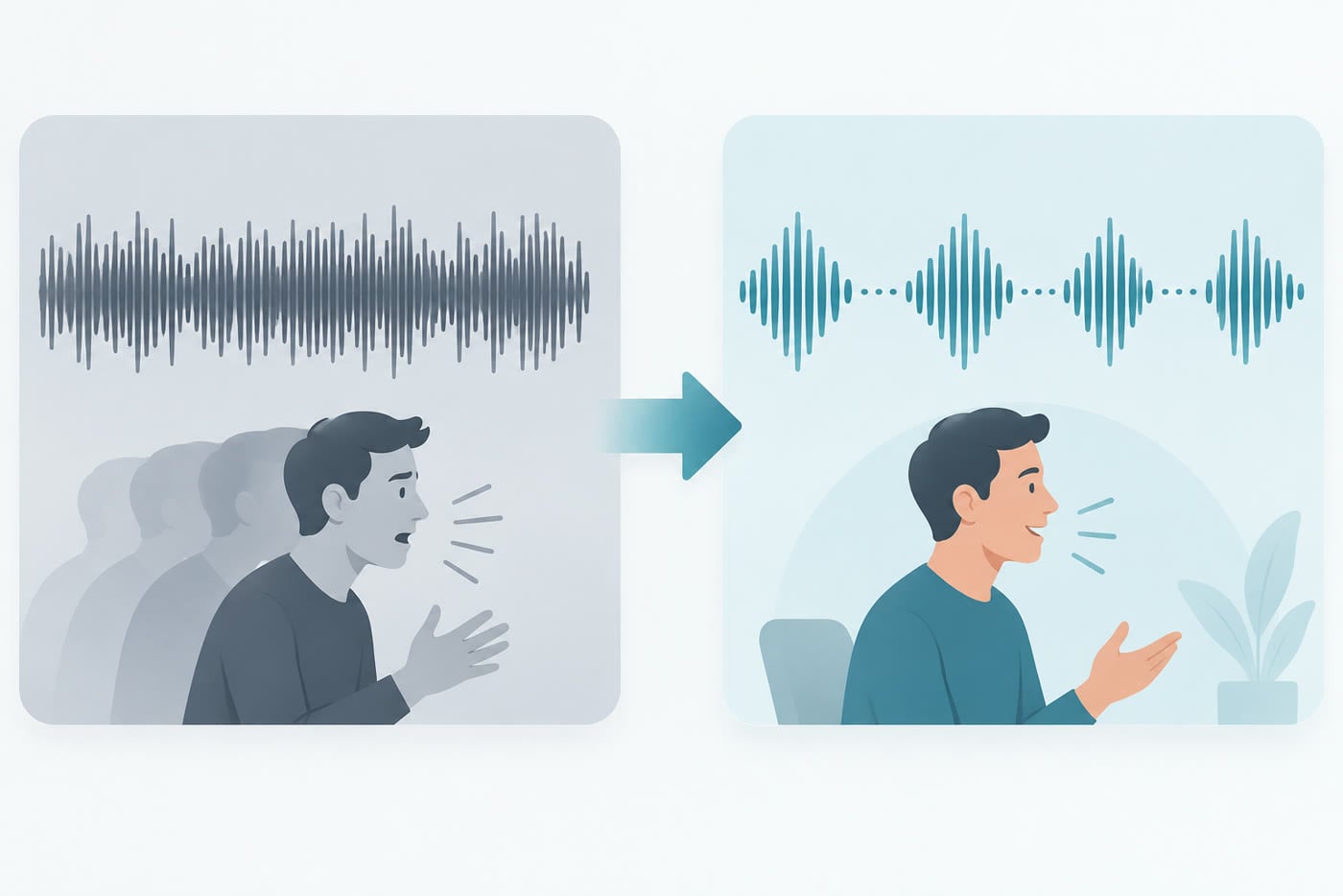
Keeping the prompt stable makes it easier to hear whether one pacing change improved the second take.
For a complete pacing framework, use how to slow down when speaking. If you want drills instead of explanation, go directly to the speech pacing exercises.
When fast speech is more than a presentation habit
Pace varies naturally by person and situation. If a persistently rapid or irregular rate regularly affects intelligibility or everyday communication, consider discussing it with a qualified speech-language pathologist. A presentation practice tool can help you observe patterns, but it is not a diagnosis.
Common mistakes when trying to slow down
Do not drag out every word. That can make speech sound unnatural while leaving the original problem—poor structure or missing pauses—untouched.
Do not chase the lowest possible WPM. A slightly faster answer with clear structure can be easier to understand than a slower answer with hesitations and restarts.
Do not change the wording, structure, pace, and emphasis all at once. Keep most of the answer stable so you can hear which adjustment actually helped.
FAQ: why do I talk so fast?
Why do I talk faster when I am nervous?
Nerves can change breathing, attention, and how much you try to plan ahead. Test a calmer opening and one or two planned pauses before deciding that your whole speaking style needs to change.
Is talking fast always a bad communication habit?
No. Fast speech becomes a practical problem when the pace makes ideas hard to follow, causes important words to blur together, or leaves you unable to pause where the message needs structure.
How can I slow down without sounding boring?
Use pauses and emphasis instead of stretching every word. Keep your natural energy, but leave more space after the main point and before a new idea begins.
How do I know whether I actually talk too fast?
Measure a real recording with the speech pace calculator, then listen back for clarity. Compare the number alongside pauses, structure, and how easy the message is to follow.
Conclusion: identify the trigger before changing your whole voice
If you are asking “why do I talk so fast?”, start with one repeatable pattern: the rushed opening, the overloaded answer, the missing pause, or the habit of planning too far ahead. Then test one small cue on a second take. That gives you useful evidence instead of a vague instruction to “slow down.”
Measure your baseline with the speech pace calculator, use the full how to slow down when speaking guide, or choose a drill from the speech pacing exercises.